Hurricane Prep for Above Ground Pools in Melbourne
Start Your Transformation
Do not drain your above ground pool before a hurricane. Lower the water level by 1–2 feet below the skimmer, shock it 24–48 hours before landfall, cut power to the equipment, remove the cover, and bring every loose item inside. Inspect your screen enclosure before the season starts — not during an evacuation. The water weight is what anchors the pool through the storm. Draining is the single most expensive mistake Melbourne families make.
Your First Hurricane Season With a Pool
You finally put in the pool. The kids swam every weekend through April and May. Now it's June, the NHC is tracking the first named storm, and you're looking at the deep end wondering what you're supposed to do.
If you own a pool in Melbourne, hurricane season isn't a hypothetical. Between June 1 and November 30, every homeowner from Palm Bay to Indialantic is one advisory away from sandbags and plywood.
The good news: your above ground pool is one of the easiest parts of the yard to secure — if you know what actually works and what just feels productive. Most of the "tips" circulating online are wrong. A few of them will ruin your pool faster than the storm would.
Here's how to prep an above ground pool for a hurricane on Florida's Space Coast, based on what licensed contractors actually do in the 72 hours before landfall — plus what to check after the storm passes and how to get your family swimming again.
Do Not Drain Your Pool Before a Hurricane
This is the most common and most expensive mistake Melbourne families make. Draining an above ground pool before a storm sounds logical — less water, less to worry about. But it does the exact opposite.
Here's why draining is dangerous:
- Water weight is what anchors the pool to the ground. An empty pool is a lightweight plastic-and-steel shell that can shift, tip, or take off in hurricane-force winds.
- Empty vinyl liners collapse inward. When the wind whips them, the liner can split or separate from the track — a full replacement job that runs thousands of dollars and weeks out of the summer.
- Partially sunken pools face hydrostatic pressure from the rising water table. A drained shell with groundwater pushing up underneath can shift, warp, or separate at the track — the same physics that destroys empty inground pools across Brevard County every bad season.
Keep the water in. That's not a compromise. That's the answer.
Water Level, Chemistry, and Pre-Storm Prep
You do need to lower the water level — but only by 1 to 2 feet below the skimmer. That small drop creates room for rainfall so the pool doesn't overflow your deck and electrical. And it takes pressure off the skimmer and return lines during hours of heavy rain.
The other pre-storm water management steps:
- Shock the pool with a double dose of chlorine 24–48 hours before landfall to offset debris and runoff contamination. For saltwater pools, shock with liquid chlorine — the salt cell stops generating once the pump is off.
- Balance pH and alkalinity so the water doesn't go cloudy or corrosive during the shutdown period.
- Kill the pump. Cut power at the breaker and leave it off until power and weather both stabilize. Running dry or on surging power destroys pumps fast, and replacing one takes weeks.
Do this in daylight, two days out. Once the bands start rolling in, you'll be dealing with plywood and sandbags, not chlorine.
📌 72-Hour Hurricane Pool Checklist
- Lower water level 1–2 feet below skimmer ( DO NOT drain)
- Shock with double chlorine dose; balance pH and alkalinity
- Cut power to all pool equipment at the breaker
- Remove the pool cover, ladders, toys, and every loose item
- Photograph everything for insurance documentation
Brevard, Indian River & St. Lucie's trusted experts in custom pool construction, screen enclosures, concrete, pavers, and outdoor kitchens. Call ☎ 772-758-5372 for premium backyard transformations.
Lock Down Equipment, Furniture, and Projectiles
In a hurricane, every unsecured item is a potential projectile — aimed at your pool, your screen enclosure, your windows, and your neighbor's house.
Your pre-storm yard checklist:
- Pool accessories(ladders, steps, cleaners, toys, floats, skimmer nets) — store inside the garage or shed
- Pool pump — cut power at the breaker, disconnect and wrap the motor if time allows
- Patio furniture, grills, potted plants, trash cans — inside or tied down with ratchet straps
- Pool cover — leave it OFF. A fitted cover becomes a sail in hurricane winds, damages the pool wall, and flies off as a projectile
- Anything else not bolted down — if you can pick it up, so can 120 mph winds
Document everything with photos or video before the storm. Insurance adjusters want before-and-after evidence. Your phone is the fastest way to get it.
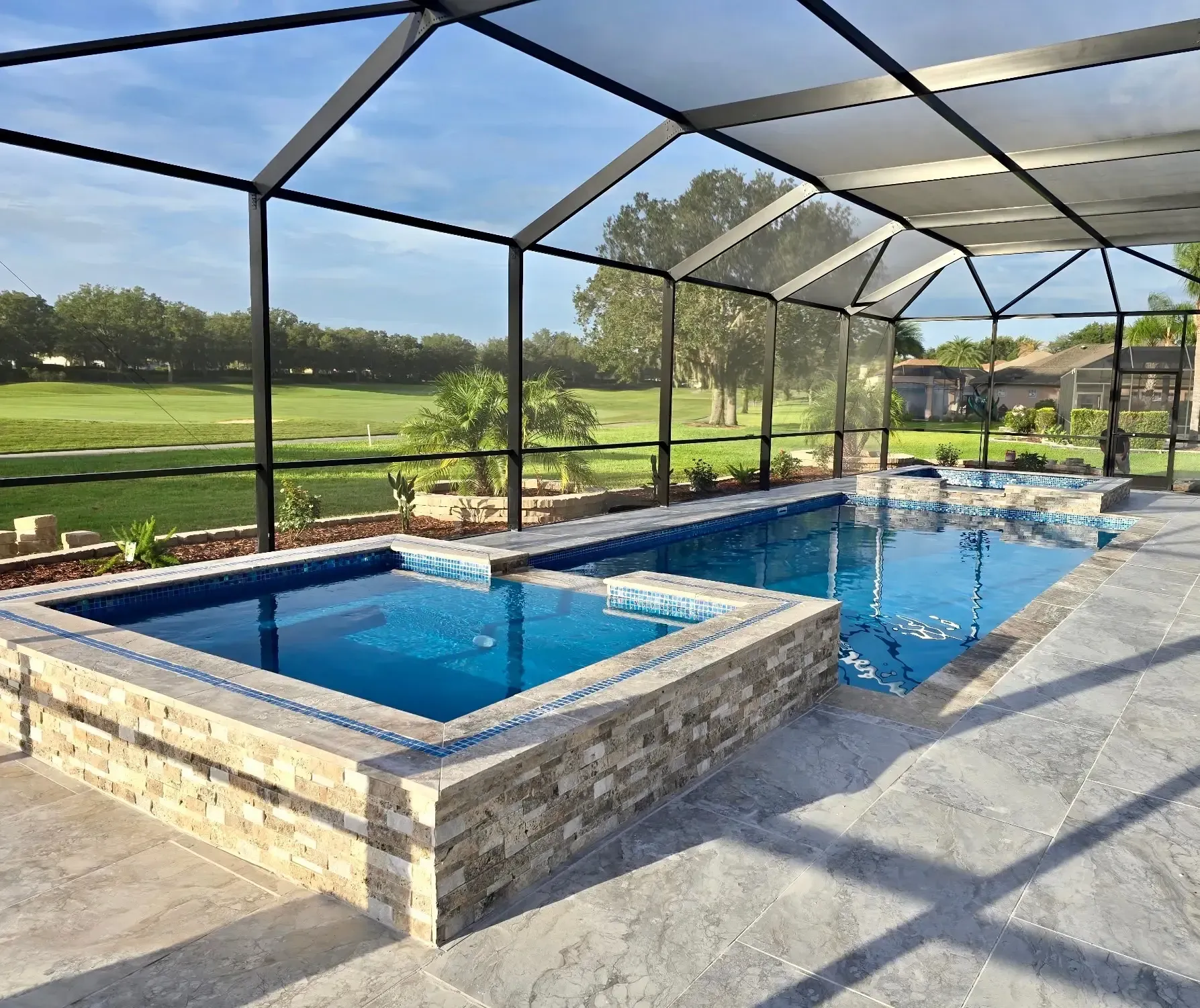
Screen Enclosures on the Space Coast — Built Right, Built Ready
A code-rated screen enclosure is one of the best investments a Melbourne pool family can make — but only if it's engineered for Florida's current wind zones.
Older enclosures with galvanized (not stainless) fasteners corrode in coastal salt air and lose structural integrity years before the frame itself would have failed. Enclosures built to current Florida Building Code, with stainless steel hardware and reinforced cross-bracing, carry significantly higher wind-load ratings.
Before the season gets serious, walk around the enclosure and check for:
- Loose panels or frame connections
- Rusted or corroded fasteners (galvanized, not stainless)
- Sagging or torn screen mesh
- Cracked or separated beams at the load-bearing corners
If anything looks off, call your contractor now — not during an evacuation. For higher-category storms, some families choose to remove individual screen panels so wind can pass through rather than load the frame. That's a judgment call based on your enclosure's age and spec, and a licensed contractor should guide it.
After the Storm: Your Recovery Checklist
Once the wind drops and it's safe to go outside, work the list — but don't let the kids near the pool yet.
- Walk the yard in shoes, not sandals. Metal debris, nails, and broken screen framing end up everywhere.
- Photograph everything first, before you touch anything. Insurance claims hinge on documented damage.
- Do not touch the pool pump until power is stable and the breaker has been reset. If the pump was submerged, it needs a licensed electrician before it turns back on.
- Clear surface debris and test the water. Expect cloudy, off-balance chemistry — shock again, rebalance pH and alkalinity, and vacuum after the water settles.
- Inspect the pool structure and screen enclosure. Look for wall distortion, liner tears, bent framing, and missing fasteners. Even a minor frame shift can compromise next season's wind rating.
If the pool looks structurally compromised, or the enclosure has clear frame damage, stop and call a licensed contractor. A quick inspection now prevents a much bigger bill next storm — and keeps the kids out of unsafe water.
One Call Before the Storm, One Call After
The Melbourne families who handle hurricane season best are the ones who don't have to figure out who to call when something fails.
Right Way Enclosures, Pools & Spas handles your pool, your screen enclosure, your pavers , and any storm-related repairs under one contract. If a panel tears loose in Palm Bay or a pump needs replacing in Indialantic, it's one phone call, not five.
If you want your pool and enclosure inspected before hurricane season — or you're thinking about storm-hardened upgrades — call now. Don't wait until the cone points at Brevard County.
Related services: Above-Ground Pool Installation · Pool Screen Enclosures · Pavers & Hardscapes
Related reading: Above-Ground Pool Installation in Palm Bay · Above-Ground Pool Installation in Melbourne · Above-Ground Pools in Viera & Suntree · Above-Ground Pool Permits in Brevard County 2026 · Above-Ground Pools in Vero Beach: Costs & Permits
FAQs
Should I drain my above ground pool before a hurricane?
No. Draining creates more risk than it solves. An empty pool can shift, tip, and pools that are partially sunken can face hydrostatic pressure from the rising water table — the same physics that destroys empty inground pools every bad season. Lower the water level by 1 to 2 feet below the skimmer to handle rainfall, but keep the bulk of the water in. Water weight is what anchors the pool through the storm.
Do I leave the pool cover on during a hurricane?
No. Pool covers act like sails in hurricane-force winds. Even a well-secured cover can catch the wind, damage the pool wall, pull out anchors, or tear away as a projectile that damages your home or your neighbor's. Remove the cover, store it inside, and reinstall it after the storm once debris is cleared.
What do I do with my pool pump and electrical equipment before a hurricane?
Shut off power to all pool equipment at the breaker well before the storm. If time allows, disconnect the pump motor and move it inside the garage. If not, wrap it in heavy plastic and secure it so wind-driven rain can't reach the motor. Never run the pump during a storm or while power is intermittent — low water or surging power will destroy it fast, and replacing one takes weeks.